
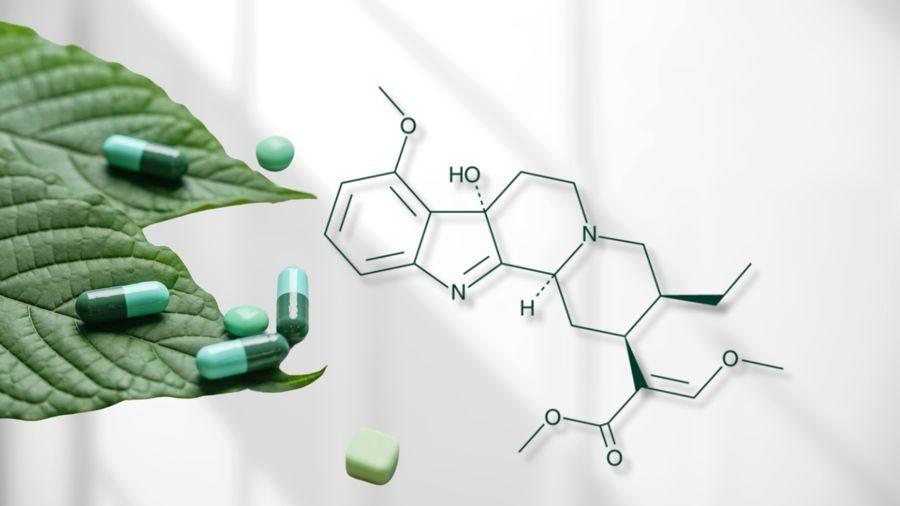
Mitragynine
Kratom has gained popularity as a legal remedy, a “natural” and readily available alternative to prescription analgesics and synthetic psychoactive substances. It was originally used in Asian countries, but globalization has helped spread this semi-legal “semi-medicine” to the West.
Kratom has a specific feature: in small doses it acts as a stimulant, but in large doses, on the contrary, it acquires the properties of a relaxant. Therefore, kratom has gained popularity in many countries as a natural and readily available over-the–counter stimulant-analgesic – almost an “ideal” remedy for consumers trying to self-medicate pain, opioid use disorders, and other diseases.
Kratom is often used by representatives of labor-intensive or monotonous professions in order to prevent physical or mental exhaustion. The popularization of kratom in the media as a safe and effective alternative to prescription painkillers has long attracted the attention of the medical community, but insufficient data has been collected on its safety.
Kratom is a common name for a plant extract that is obtained from the leaves of the Mitragyna speciosa tree, native to Southeast Asia. For centuries, the indigenous people of this region have chewed the fresh leaves of this plant or brewed tea from them to achieve both stimulating and analgesic effects.
The development of online commerce has popularized this “oriental tradition”: in almost any country – and Ukraine is no exception – you can buy online a whole or crushed leaf of Mitragyna speciosa, and of various varieties (for example, ketum, kakuam, itang, tom, biak-biak). Websites selling such a product offer to make tea from it or chew it – that is, to use it in the way that indigenous peoples historically did in the regions where the tree grows.
In the West, more concentrated versions of kratom have recently been produced in the form of powders, capsules, or liquid extracts. Today, such products are the most popular kratom preparations sold in the United States, where today there are about 15 million active users of this substance.
At the junction of complementary medicine
In the regions endemic to plants, kratom was also used in traditional medicine. For example, in Thailand, the leaves of the plant are also used as remedies for intestinal worms, mood stimulants and painkillers. In Malaysia, kratom is used for opioid addiction replacement therapy.
Most often, the leaves of Mitragyna speciosa
chewed to relieve musculoskeletal pain and boost energy, appetite and libido;
It was brewed and used for wound healing and as a local anesthetic;
They were used as extracts for the treatment of cough, diarrhea and intestinal infections.
Since the leaves of this plant taste bitter, such herbal preparations are usually supplemented with a sweetener.
Features of the pharmacological activity of kratom
Kratom has a complex mechanism of action with a predominant stimulating effect at low doses and analgesic/euphoric effect when consumed in higher doses.
More than 40 pharmacologically active alkaloids have been isolated from this plant, the content of which varies between plant varieties and final product formulations.
The main active substance of Mitragyna speciosa is considered to be the alkaloid mitragynine, which has a high affinity for the k-, δ-opioid receptors. However, its metabolite 7-hydroxymitragynine is much more pharmacologically active: when taken orally, its antinociceptive effect is 5 times stronger than that of morphine.
In the United States, where the largest amount of data on the frequency and effects of kratom use has been collected so far, the plant is used to treat pain, anxiety, post-traumatic stress, depression, attention deficit disorder, opioid addiction, and generally to improve mental health.
Basically, CNS stimulants, including those that have been used in medicine for almost a century, are considered dangerous and classified as controlled substances. However, over the years, these medications have been used for a variety of indications, including nasal congestion, narcolepsy, appetite suppression, overeating, depression, and ADHD. Against their background, such “natural alternatives” as kratom look harmless. But is this really the case?
The most common side effects of kratom reported in the literature include loss of appetite, nausea, sweating, and dry mouth. Regular and prolonged use can lead to constipation, anorexia, skin hyperpigmentation, insomnia and polyuria. Kratom is believed to be addictive (in surveys, many consumers reported developing withdrawal symptoms), which is why regulators in a number of Western countries began to consider it as a recreational drug.
Serious side effects have also been reported with overdose (if the daily cumulative dose was more than 5 g): seizures, encephalopathy, temporary paralysis and cognitive impairment, as well as respiratory depression, cardiac and respiratory arrest, liver damage, hypothyroidism, etc. It is noted that cases of serious toxicity are relatively rare and usually occur when taking high doses or when using kratom with other psychoactive substances. At the same time, the mortality risk associated with the use of kratom is difficult to determine, mainly due to the difficulties in diagnosis.
In a number of countries, both Asian and European, criminal liability is provided for the possession and sale of kratom. However, in some countries, this plant is being studied as a basis for the development of non-opioid analgesics.