
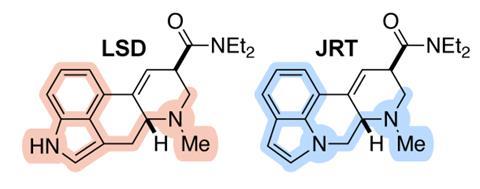
JRT is a new analogue of LSD without hallucinations.
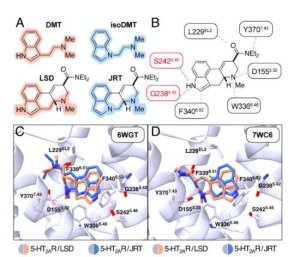
The causes of schizophrenia remain a subject of scientific debate. Researchers associate the disease with a combination of genetic mutations, social conditions, and external influences. The famous psychiatrist Ronald Laing called it a natural reaction to the absurdity of the modern world. However, the exact mechanisms triggering destructive changes in the psyche have not yet been identified.
A discovery in neurobiology: key changes in the brain.
Researchers at the University of Pittsburgh have identified an important feature of schizophrenia — a reduction in the density of dendritic processes in neurons. These structures are critically important for the transmission of nerve impulses and cognitive functions. Their damage directly affects a person’s thinking and behavior.
Neuroplasticity as a path to healing
Scientists from the University of California have proven that certain compounds can restore neural connections through the stimulation of neuroplasticity. However, classic psychedelics such as LSD or ketamine are not suitable for therapy due to their side effects. This prompted science to seek safe alternatives.
JRT is a safe alternative to psychedelics.
After five years of research, the substance JRT was created — a modified analogue of LSD. By changing the structure of the molecule, scientists retained its ability to stimulate neuron growth, but eliminated its hallucinogenic effects. The first tests on rodents showed impressive results: dendrite density increased by 46%, and the synapses of the prefrontal cortex were activated by 18% without changing the animals’ behavior.
The prospects of neuroplastogens in medicine.
JRT has become part of a new class of neuroplastogens — drugs that restore neural networks. Despite successful preclinical tests, none of these agents has yet been approved for use. Interestingly, the original compound — LSD — was synthesized back in 1938 by Albert Hofmann, but only now has science been able to channel its potential in a therapeutic direction.